
ITP for asphalt works: the inspection points and acceptance criteria consultants expect
“Application of primer prior to asphalting is missing in the ITP” is one of the most common consultant comments on road packages. This guide sets out an asphalt inspection and test plan that answers it, and the values from ADQCC Sections 3.3 and 3.4 that each row should carry.
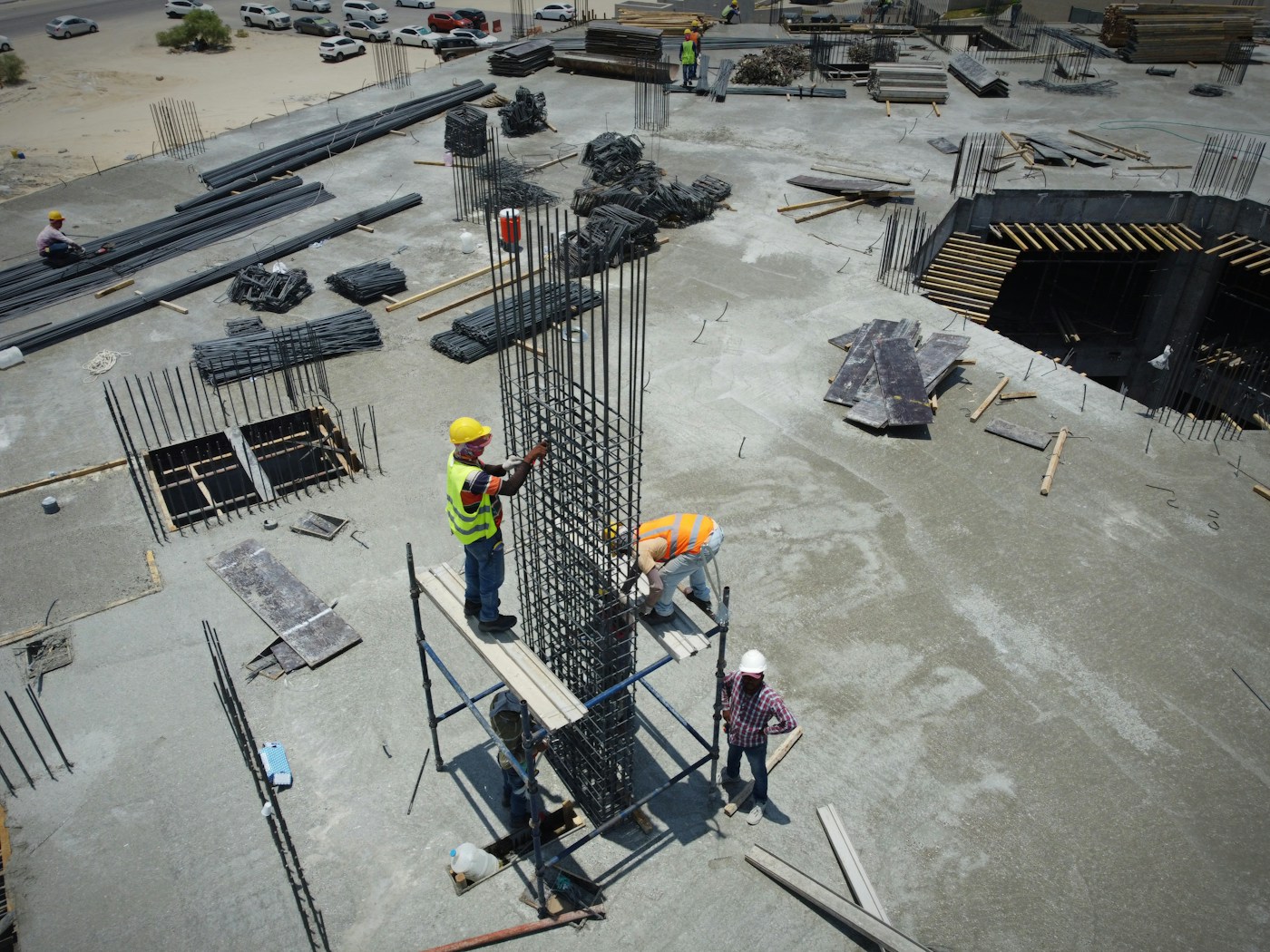

An inspection and test plan is where the consultant looks first. They check that every stage named in the method statement has an inspection, that every material has an inspection request and third-party testing, and that the trials which prove the method (the prime trial and the plant trial) are hold points. An asphalt ITP that does those four things rarely comes back.
Four rules for an asphalt ITP
- One row per stage and per layer. Base surface before priming, prime coat, each asphalt course, tack coat. Each its own inspection. Prime coat in particular must be its own row.
- Trials are hold points. The prime coat site trial and the 450 t plant trial set the standard for production; neither may be downgraded to witness.
- Quantified criteria only. Every row states the value and the ADQCC section. “As per specification” on its own is a defect.
- Frequencies from the specification. Do not invent higher frequencies than ADQCC sets; you will be held to them.
The rows, in order
| Inspection | Frequency | Acceptance criterion | Typical consultant role |
|---|---|---|---|
| Base surface before priming | Before priming | Accepted base, cleaned full width by power broom and air, dry, ambient ≥13°C | Witness |
| Prime coat site trial | Start of works | Rate within 0.6–1.0 kg/m² giving ≥10 mm penetration, no wet spots | Hold |
| Prime coat application | Each application | MC-70 at the trial rate, 60–80°C; no traffic before 24 h; paving within 48 h | Hold |
| Asphalt plant trial | First production day | 450 t at optimum binder content in one shift, conforming to the JMF | Hold |
| Mix conformity | First 200 t and each 200 t; Marshall twice a day; Gmm daily | Within the approved JMF limits | Review |
| Mix temperature at paver | Every load | 135–163°C on introduction to the paver; loads outside discarded | Witness |
| Paving and rolling | Each course | Ambient ≥8°C; layer ≤100 mm; breakdown complete before 110°C; steel rollers ≤4.8 km/h, pneumatic ≤8 km/h; overlap ≥ half roller width | Witness |
| Base course density and thickness | Cores per course | 98–101.5% of Marshall density; air voids 4.5–8.5%; ±6 mm, deficiency never >12 mm | Witness |
| Base course acceptance | Each course | All criteria met before tack | Hold |
| Tack coat | Each application | CSS-1h / SS-1h diluted ~1:1, 0.18–0.35 kg/m² at 10–60°C; surface course within 24 h | Hold |
| Surface course density and thickness | Cores per course | 98–101.5%; air voids 4.5–8.5%; ±6 mm (deficiency >6 mm: top 50 mm relaid) | Witness |
| Surface regularity | Intervals ≤2 m | ≤4 mm under 5 m straightedge; profile ±10 mm; IRI where the contract requires | Hold |
Temperatures that are often wrong
Three values appear wrongly in many historical method statements and ITPs:
- Prime coat at 50–80°C. Use 60–80°C, which satisfies both of the ADQCC clauses that govern MC-70 application temperature.
- “Delivered at not less than 150°C”. ADQCC controls the mix temperature when it is introduced to the paver: 135–163°C. The 150°C delivery rule is not in the specification.
- “Breakdown rolling at 135–163°C”. That range belongs to the paver. Rolling is governed by the floor: breakdown must be complete before the mix falls below 110°C, and areas that miss it are removed.
Plan temperature-sensitive work inside the permitted window through early starts within normal working hours and the summer midday break. Out-of-hours work is a separate, permit-controlled arrangement, not something to volunteer in a standard method statement.
Records and third-party testing
Name the record for every row: delivery notes with temperature for each truck, plant printouts, temperature logs, core reports, and test reports stamped “CONFORMS” or “DOES NOT CONFORM” from the approved third-party laboratory. Consultants increasingly ask for core, Marshall and temperature records per zone, so set the ITP up to report by zone from the start.
Questions
Yes. Prime coat application is a separate inspection with its own rate, temperature and penetration criteria, and its absence from the ITP is one of the most common consultant comments on asphalt submissions.
ADQCC requires the job mix formula to be proved by a 450 tonne trial produced in one shift on the first production day at the optimum binder content. It is the initial-phase trial for the asphalt and belongs in the ITP as a hold point.
In-situ air voids of 4.5 to 8.5 percent, with core density between 98 and 101.5 percent of the Marshall density.
Jumbat Studio builds the ITP from the method statement, then checks the pair: every inspection step has an ITP point, every hold point has a step, and every checklist carries the ITP criterion word for word.

Let’s make your next audit a non-event.
Book a free 30-minute consultation. We will tell you honestly whether you need a consultant, and if you do, exactly what it will take.