
Risk assessment for excavation works in Abu Dhabi: hazards, controls and ratings that pass review
Excavation is where reviewers read risk assessments most carefully, because it is where people are killed. Here is how to write the excavation element so it reflects ADOSH SF 4.0 and survives an OSH review.
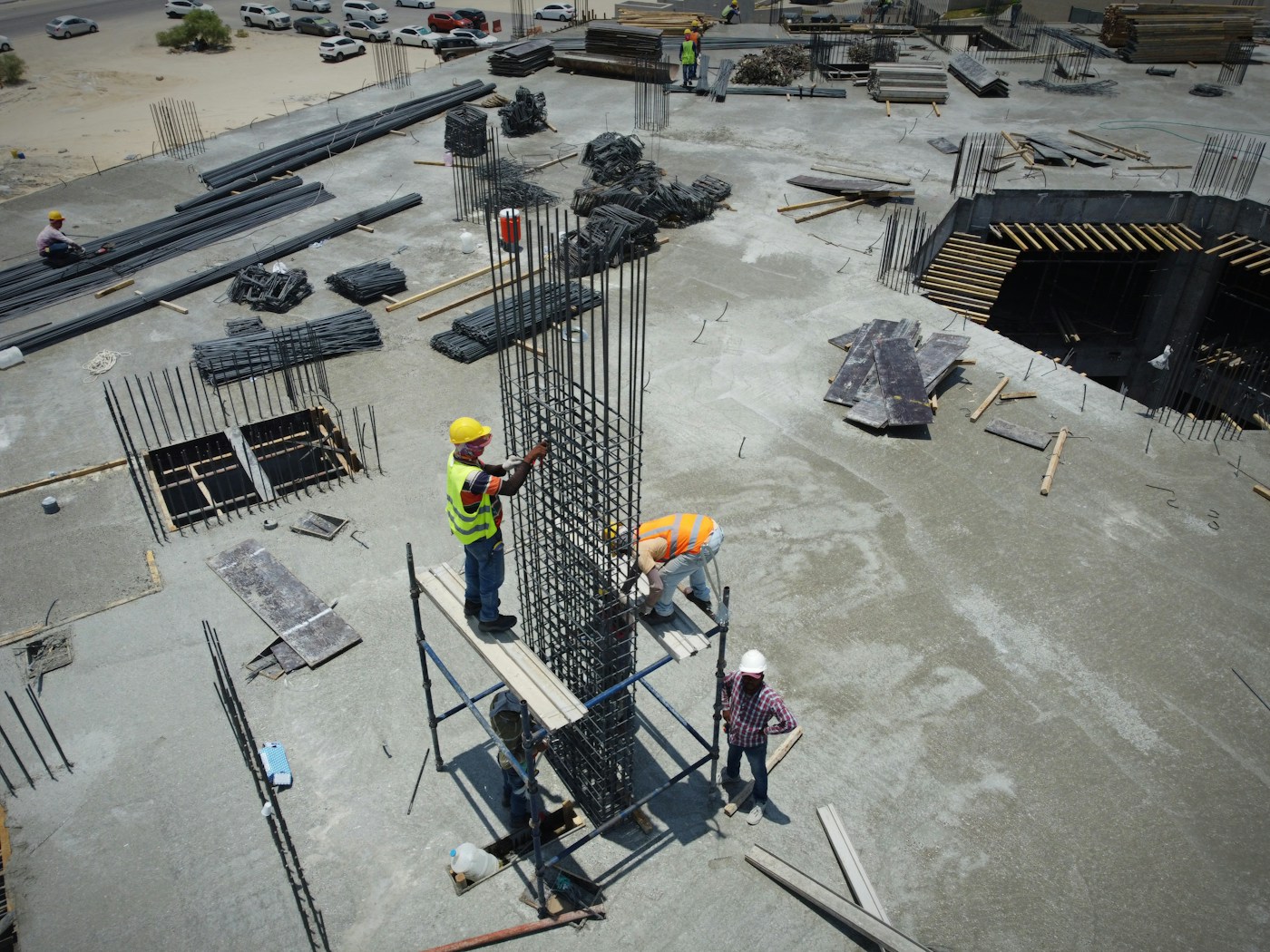

Most excavation risk assessments fail review for the same three reasons: the controls are generic, the residual rating pretends severity disappears once controls are in place, and the Codes of Practice are cited wrongly. Each is easy to fix.
How the element is structured
Each risk assessment element names the activity and the method statement clause it comes from, so the reviewer can trace it. The hazard cell is set out under three headings — Hazards, Consequences/Impact and Identified at Risk: each as bullet points, never as a run of semicolons. The control cell lists the controls as bullets and ends with the legal references.
Hazards and persons at risk
- Collapse of excavation sides; falls of persons or plant into the excavation
- Strike of live underground services (LV cables, water and fire-fighting mains, chilled water, telecom)
- Plant movement at the edge; spoil and materials surcharging the edge
- Water ingress; hazardous atmosphere in deep or confined excavations
Identified at risk: operatives in and near the excavation, excavator operators, banksmen, surveyors, other trades and, in a live site, the public or building occupants.
Controls, in hierarchy order
Where the initial rating is High or Extreme, start with elimination or engineering controls, then administrative controls, then PPE, or say in a line why no higher control is practicable. A typical excavation element carries fifteen to twenty-five specific controls:
- MEP clearance approved by all disciplines; services located from as-built records, cable and GPR scans and hand-dug trial pits; hand digging within 500 mm of located services.
- Excavations deeper than 1.2 m battered, benched or shored to an approved temporary works design.
- Excavation permit issued before work starts.
- Spoil, materials and plant kept at least 1 m from the edge; stop blocks for plant and trucks.
- Hard barricades and signage at every open edge before the shift ends; covers on small openings.
- Safe access ladders extending above the edge; no entry to flooded or unsupported excavations.
- Daily inspection, and after rain, by a competent person, recorded.
- Dedicated banksman with the excavator; no one in the swing radius; reversing alarms and beacons checked.
- Certified plant and operators, with daily pre-use checks.
- Rescue arrangements briefed; gas testing where the excavation behaves as a confined space.
Close with the references: Federal Decree-Law No. 33 of 2021 and ADOSH SF 4.0 CoP 29.0 Excavation Work, CoP 39.0 Overhead and Underground Services, CoP 22.0 Barricading of Hazards, CoP 21.0 Permit to Work Systems and CoP 36.0 Plant and Equipment. See our Code of Practice list for the full set.
Honest ratings
On a five-by-five matrix, deep excavation typically starts at probability 4, severity 5: Extreme. Controls reduce the probability; they rarely reduce the severity, because a collapse is still potentially fatal. A residual of 1 × 5 (Moderate) is honest and is what experienced reviewers expect. A residual of “Low” on an excavation, plant or lifting element suggests the assessment was written to look good rather than to manage risk. Colour both the rating number and the level cell, for the initial and the residual rating.
From risk assessment to job safety analysis
The risk assessment covers the activity; the job safety analysis covers today’s task, at this location, with this crew. Raise the JSA on the main contractor’s form before each task and shift, copying the job steps from the method statement and the controls from the approved risk assessment, never inventing new ratings on the day. Re-issue it when the method, plant, crew, location, permit or ground conditions change, and after any incident or near miss.
Questions
Excavations deeper than 1.2 m must be battered, benched or supported to an approved temporary works design, and shallower excavations still need assessment where the ground is poor or loads are close to the edge.
ADOSH SF 4.0 CoP 29.0 Excavation Work, together with CoP 39.0 Overhead and Underground Services for utility clearance and CoP 22.0 Barricading of Hazards for open edges.
Rarely for excavation. Controls lower the probability, but the severity of a collapse or service strike stays high, so a residual of probability 1 and severity 5, Moderate, is the honest result most reviewers expect.
Jumbat Studio drafts one risk assessment group per method statement activity, with specific controls, honest ratings, both rating cells coloured, and Code of Practice citations checked against the current list.

Let’s make your next audit a non-event.
Book a free 30-minute consultation. We will tell you honestly whether you need a consultant, and if you do, exactly what it will take.